 Live-online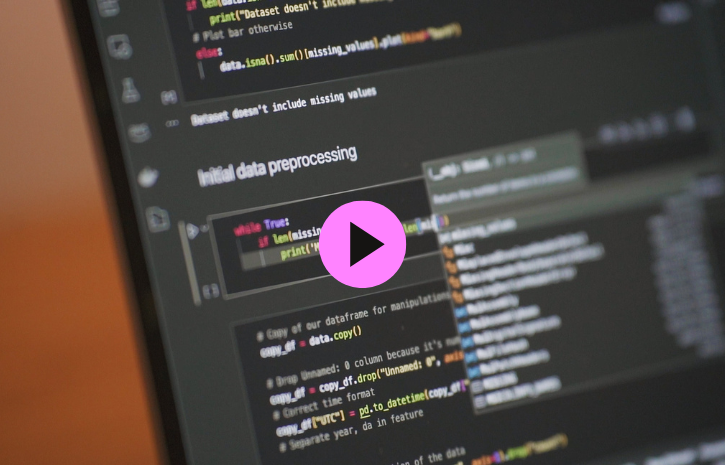
Data Science can be defined as a combination of mathematics, business, algorithms, and machine learning techniques that help us find patterns in data and make discoveries that will significantly simplify and make decision-making more effective for organizations.
The course will cover all important areas of Data Science. Using Python, the most commonly used programming language for data analysis, we will cover the full cycle of data science - initial data processing, preparation for modeling, building machine and deep learning algorithms, training, application, and turning them into products.
Throughout the program, students will work independently on an individual project.
Outcome
Skills Acquired: Python, NumPy, Pandas, SQL, Matplotlib, EDA, Feature Engineering, Data Visualization, Machine Learning, Deep Learning, LLM, AI
-

Use practical Data Science tools (Python, NumPy, Pandas, Matplotlib, SQL, Data Visualization);
-
Process, analyze data, and perform Feature Engineering;
-
Build, train, evaluate, and interpret Machine Learning and Deep Learning models;
-
Solve regression, classification, and clustering problems;
-
Process Big Data using Python
-
Build, train, use, and adapt machine learning algorithms to real business problems
-
Independently plan and execute a Data Science project and professionally present the results;
-
Make data-driven decisions and effectively communicate analytical insights in a business context.
-
Understand the concepts of Artificial Intelligence (AI), Natural Language Processing (NLP), and Large Language Models (LLMs);
Mon - Thu | 20:00-23:00
 TBC installment
 BOG installment
Who is this course for?

For mathematicians
The course is designed for those who have an analytical/mathematical formal and/or informal education and wish to develop in the field of data science.
Analysts
For analysts who use analytical tools (Excel, SQL, Power BI, etc.), create analytical reports, and want to learn programming. For those who have formal and/or informal education in analytics/mathematics.
Programmers
For programmers who have coding experience and want to learn artificial intelligence.
Program includes

Alumni Club
After successfully completing the final exam, graduates will be automatically enrolled in the Alumni Club. This membership grants them access to exclusive events, content, and special offers from our partner companies

Work Based Learning
The course includes practice-based learning, including assignments/exercises and individual projects.

Bilingual Certification
Upon successful completion of the course, students will receive a bilingual certificate.
Graduate feedback

Mariam Amashukeli
Data Science
Taking the data science course was an important step in my professional life. It can be said that after taking this course, I came closest to my goal - to work in the direction of data science. This course helped me not only to acquire or improve technical skills, but also to conceptually understand work topics. The lecturer's motivation to introduce us to the topics covered in the syllabus as interestingly and in-depth as possible is very much appreciated. Data science is quite complex and as a result of taking the course, I already know in which specific direction I want to work in practice and deepen my knowledge.

Diana Romanadze
Data Science
Due to the fast pace of life, it was very important for me to receive basic knowledge in the direction of data science in as short a time as possible and to learn as much as possible about modern technologies and their capabilities. The syllabus is arranged so logically that the learning process turned out to be as simple and consistent as possible. Not only code orientation, but concentration on content and global perception of the issue turned out to be the main benefit for me. At work, I have already started using the acquired knowledge and I think the results will soon be visible.

Beka Jikuri
Data Science
The lecturer's approach to the work and sense of responsibility doubled the value of the course for me. Every lecture was packed with the information and material we enrolled in the course to receive. In the end, with the help of the lecturer, I gained much more skills and perspectives than I had expected. I'm very satisfied, and this satisfaction grows every day as I can now apply the knowledge gained from Commschool's Data Science course in my daily life and work independently on various projects.

Nikoloz Tomashvili
Data Science
The course exceeded my expectations and gave me a comprehensive understanding of the field. Besides the knowledge gained, I was able to see the bigger picture of data science. Now I have a clear direction and many paths to explore in this vast and dynamic field. The course was an invaluable step in my career to become a data scientist.

Tornike Kharitonishvili
Data Science
Since I partially knew the data scientist roadmap and was in the process of self-study, the purpose of taking the course was to make sure I was learning in the right direction and to continue learning with the course lecturers. After completing the course, I have gained great knowledge and experience, and I know exactly in which additional directions I need to deepen my knowledge. I'm already using the knowledge gained in my current job for analytical work.

Mariam Jangveladze
Data Science
The course is very well structured in terms of content. It considers details that I personally haven't encountered in any other course. The theoretical and practical parts are well distributed. And most importantly, the course is led by the most dedicated lecturers, not to mention their knowledge and competence in this field. Although I still have a lot to learn in this direction, I believe that the knowledge I've accumulated is enough to take small steps in this field. Therefore, I plan to contribute to the development of the local market with my knowledge and get involved in relevant projects, where I will share my knowledge and skills as well as gain good experience.

Nika Jintcharadze
Data Science
It was a practical and well-structured course. It can give students very valuable knowledge, skills and vision so that after completion they can develop in the direction that interests them the most.

Nino Lekishvili
The Data Science course at CommSchool fully met my expectations — the program was in-depth, well-structured, and highly practice-oriented. The lecturer's professionalism, the precision in covering the topics, and the individualized approach were especially commendable. The theoretical knowledge gained during the course was consistently applied through practical exercises, which greatly facilitated a deeper understanding of the material. Particularly valuable was the opportunity to work with real data and compare various models, which, combined with my existing analytical experience, enables me to effectively apply this knowledge in my professional work. CommSchool truly stands out for the high quality of its teaching and service, creating a student-centered environment that fosters growth and development.

Teona Naskidashvili
Overall, the course turned out to be a very positive experience for me. I appreciated the systematic and well-structured approach to teaching, which allowed me to explore the core concepts of Python, statistics, and mathematics in a consistent and in-depth way. The practical exercises and projects were particularly valuable, as they simulated real-world cases and helped me better absorb the theoretical material. The lecturer’s professionalism and active feedback played a significant role in deepening my understanding. In general, the supportive approach of the entire CommSchool team created an environment where one feels comfortable asking questions and embracing new experiences. This was especially important for me, as I was entering a new field. What I found most valuable throughout the course was the opportunity to strengthen my foundational competencies and acquire practical skills, which now provide a solid base for my future career development. Ultimately, I believe this course was a great experience for me, and I feel confident that the knowledge and skills I’ve gained will be instrumental in advancing my career in the field of Data Science.
Syllabus
Pick your suitable time
Lecturers

Tsitsi Tepnadze
Senior Data Scientist
Tsitsi Tepnadze
Senior Data Scientist
Tsitsi has extensive academic and industry experience in Data Science. She is currently working in Germany at Vonovia as a Senior Data Scientist, where she is involved in multiple Artificial Intelligence projects. Her daily work includes processing large-scale datasets, visualization and interpretation of results, developing Machine Learning and Deep Learning models, and supporting data-driven decision-making. She holds a PhD from UiT – The Arctic University of Norway in Computer Science and Computational Engineering and is the author of multiple research papers published in international scientific journals. In addition, she has worked at TU Dortmund University, where she lectured in Calculus and Artificial Intelligence.
 Linkedin
FAQs for this course
Your search Digital Designer did not match any documents
Unable to locate relevant information?
Get Free consultationYou may interest
 Intermediate
 Beginner
  Intermediate
  Intermediate
  Beginner
  Intermediate
  Intermediate
  Beginner
  Intermediate
  Beginner
 Relevant Resources
Show More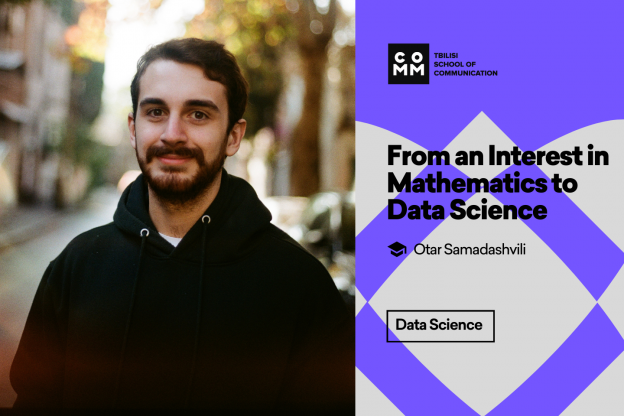
What You Should Know About the Data Science Course
If you're interested in working with data and want to learn new tools, this blog is for you. Meet Otar Samadashvili, a commschool graduate, who will share his impressions about the data science program. Otar became interested in data science while studying mathematics and statistics courses at university. He was always attracted to solving complex problems and drawing conclusions based on data. Given his interests and skills, he decided to start studying data science and develop his career in this direction. Otar had a basic knowledge of Python, which was a good starting point for this field. His goal was to transform the theoretical knowledge gained at the university into practical skills, for which he decided to take the Commschool data science course. "I chose Commschool because of their practical approach, the opportunity to work on interesting projects, and the experienced lecturer. Additionally, the syllabus was well-organized and covered many interesting topics. It was also pleasant to meet students with the same interests. In my opinion, communicating and discussing with them live during lectures was quite productive." Data Science: What Does the Course Cover? As Otar notes, he expected it to be a quite intensive and laborious course, and therefore had high expectations. Despite this, the program still exceeded his expectations. For him, the most valuable aspects were practical projects and working with real data. Otar was able to develop both technical and soft skills. The main challenge for him was absorbing a large amount of information in a short time. However, with intensive practice and study, he easily overcame this difficulty. As a result, he is already using the skills and paradigms acquired in the course at work. Data Science Course 32 lectures | 96 hours | 16 weeks Learn more "In my opinion, the most important thing gained from the course during the final project was the soft skills, as I could ask the right questions, conduct correct experiments, and develop a proper model evaluation system. All of this simplifies the technical part as well, because executing a well-designed plan is much easier." Within the data science course, you will learn to process big data using Python, build and apply machine learning algorithms and adapt them to business models, and use artificial intelligence (AI) and large language models (LLM). The program includes practice-based learning, which will give you the opportunity to gain practical experience along with theoretical knowledge. The final individual project is the most interesting part of the course, which represents a kind of summary of the material studied throughout the program. Skills Needed for a Data Scientist According to Otar, technical skills such as mathematics, statistics, and programming are essential for a data scientist. In his opinion, this technical part is well covered during the course, as they were able to learn relatively complex machine learning topics more easily and comprehensively. In addition to technical skills, it's also necessary to develop soft skills in this field. For example, effective communication, analytical thinking, and asking the right questions. Otar notes that many courses don't cover such issues, so it was pleasant that he had the opportunity to develop and improve these skills at commschool. "In my opinion, learning data science and continuing a career in this direction is the right choice for many people." For those interested in data science, Otar advises starting with learning the basics of programming. Work on practical projects in parallel and, most importantly, don't be afraid of challenges and be ready for intensive learning. It's also important to keep an eye on current events in this direction, as the data field is developing very rapidly. After completing the course, Otar continues self-development, learning, and working on personal projects. If you're ready for new adventures, then familiarize yourself with the course syllabus and join us at Commschool! Learn More About Course
What is Data Science?
Data Science is the study of data aimed at extracting valuable business insights. It's a multidisciplinary approach that combines principles and practices from mathematics, statistics, artificial intelligence, and computer engineering to analyze large volumes of data. This analysis helps data scientists pose and answer questions such as what happened, why it happened, what will happen, and what actions can be taken based on the results.If you're interested in this fascinating and complex field, you're in the right place, as this blog will explore the importance and applications of data science.Why is Data Science Important? Data science is crucial because it combines tools, methods, and technology to create value from data. Modern organizations are inundated with data; numerous devices can automatically collect and store information. Online systems and payment portals gather vast amounts of data across electronic sales, medicine, finance, and all other aspects of human life. Consequently, there is an abundance of available data in various formats including text, audio, video, and images.Data Science Course 32 Lectures | 96 Hours | 16 Weeks Learn MoreHistory of Data Science While the term data science isn't new, its meaning has evolved over time. The term first emerged in the 1960s as an alternative name for statistics. In the late 1990s, computer science professionals formalized the term. The proposed definition viewed data science as a distinct field with three concurrent aspects: data design, collection, and analysis. It took another decade for the term to be adopted outside academia.The Future of Data Science Artificial intelligence and machine learning innovations have made data processing faster and more efficient. Industry demand has created an ecosystem of courses, degrees, and job positions in data science. As data continues to grow, so does the need for processing it, which is why data science shows strong projected growth over the coming decades.How is Data Science Used? Data science examines data through four main approaches: Descriptive Analysis Descriptive analysis examines data to understand what happened or is happening in the data environment. It features data visualization tools such as pie charts, bar graphs, line graphs, tables, or generated narratives. For example, a flight booking service might record data like daily ticket reservations. Descriptive analysis reveals booking peaks, booking decreases, and high-performing months for this service. Diagnostic Analysis Diagnostic analysis is a detailed examination of data to understand why something occurred. It employs techniques such as drilling down, data discovery, data mining, and correlations. Multiple data operations and transformations can be performed on existing datasets to discover unique patterns in each technique. For example, a flight service might delve into a month of particularly high activity to better understand the cause of booking peaks. This might lead to discovering that many users visit a specific city for monthly sporting events. Predictive Analysis Predictive analysis uses historical data to make accurate forecasts about data patterns that might occur in the future. It employs techniques such as machine learning, forecasting, pattern matching, and predictive modeling. In each of these techniques, computers are trained to identify causal relationships in data. For example, a flight service team might use data science to predict flight booking patterns for the upcoming year. Computer programs or algorithms can review past data and predict booking peaks for specific routes in May. In anticipation of their customers' future travel needs, the company can begin targeted advertising for these cities starting in February. Prescriptive Analysis Prescriptive analysis takes predicted data to the next level. It not only forecasts what might happen but also suggests optimal responses to these outcomes. It can analyze potential consequences of different choices and recommend the best course of action. It utilizes graph analysis, simulation, complex event processing, neural networks, and recommendation engines from machine learning. What Benefits Does Data Science Bring to Business? Data science is revolutionizing how companies operate. Many businesses, regardless of size, need a robust data science strategy to maintain growth and competitiveness. The key benefits include: Discovery of Unknown Transformative Patterns Finding New Products and Problem Solutions Real-time Optimization [Detailed explanations and examples follow for each benefit] So, as you can see, data science is a multifunctional and essential field for any business's success. If you're interested in this profession, don't wait - join CommSchool!
Data Analytics: Tools and Programming Languages
Data analytics is key to success in modern business. The tools and programs used in this field may vary depending on specific tasks and data volume. However, there are fundamental instruments and methods that are essential for effective analysis.In this blog, we'll explore the most important tools and programming languages in detail.Essential Tools for Data Analytics SQL: Universal Database Management Language SQL is a fundamental tool in data analytics, distinguished by: Simple and flexible syntax Wide application across different industries Standardized approach Main advantages of SQL: Compatibility with popular systems (MySQL, PostgreSQL, SQL Server, etc.) Extensive data manipulation capabilities High security standards Effective optimization mechanisms [Insert SQL-related visual element here] Power BI: Modern Standard for Data Visualization Unique features of Power BI: Real-time data analysis Intuitive interface Diverse integration capabilities Built-in Power Query functionality Python: Universal Tool for Data Analysis Python's key advantages: Easy-to-learn syntax Rich library ecosystem Versatile application possibilities Strong community support R: Specialized Language for Statistical Analysis Tableau: Professional Visualization Platform Excel: Reliable Tool for Basic Analysis Data Analytics Course at CommSchool[Insert course banner/visual here]Unique course features: Practical teaching methodology Real business cases Experienced instructor - Natalia Javakhishvili Interactive learning environment During the course you will learn: Converting business problems into analytical frameworks Practical application of SQL Visualization techniques in Power BI Data-driven decision making ConclusionSuccess in data analytics requires both theoretical knowledge and practical experience. CommSchool's course offers an optimal combination of both.Get detailed information about the course and start your career in data analytics![Call to Action button: "View Course Syllabus"]The course structure includes comprehensive training in data analysis cycle, providing essential theoretical knowledge and developing relevant skills. You'll learn how to formulate business problems as analytical challenges, find appropriate data, clean and process it using SQL. Additionally, you'll explore result visualization using Power BI, communication of findings, and making analytics-based decisions.Natalia will use real cases from practice to develop these skills. Through discussion of these cases, she will help students focus on details, analytical reasoning, and asking the right questions. The lecture will be interactive, in a Q&A format, full of examples and practical exercises.In my opinion, the main value of learning from a practitioner is their access to real problems and cases. Instead of analyzing sales trends or problematic cases of imaginary companies available on the internet, examples tailored to local reality will make understanding specific problem-solving approaches more relatable. So, if you want to master one of the most in-demand professions with the help of a professional instructor, you should definitely take this opportunity. Explore the course syllabus in detail and join us at CommSchool!
 Continue with Google
 Continue with Facebook